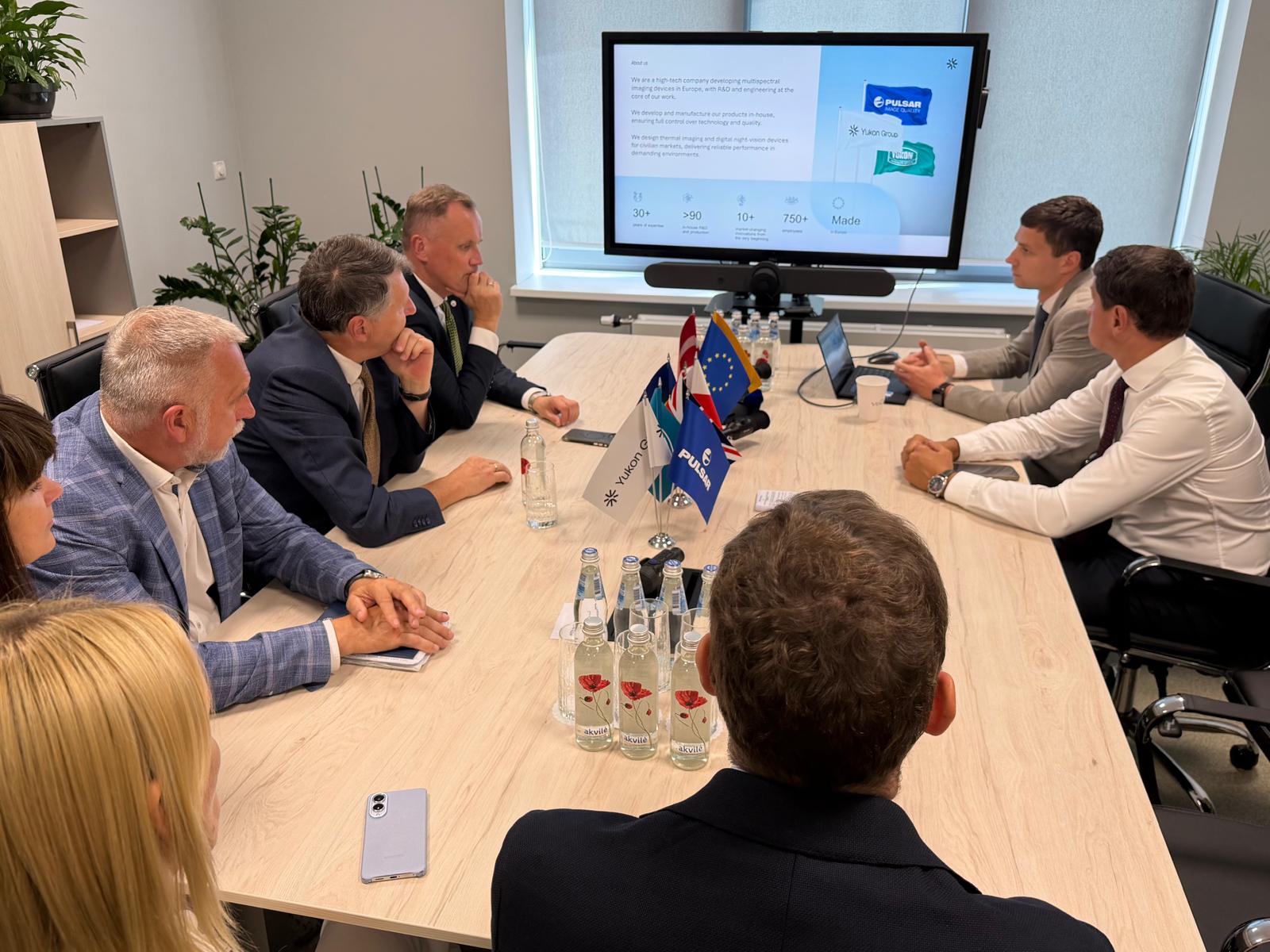
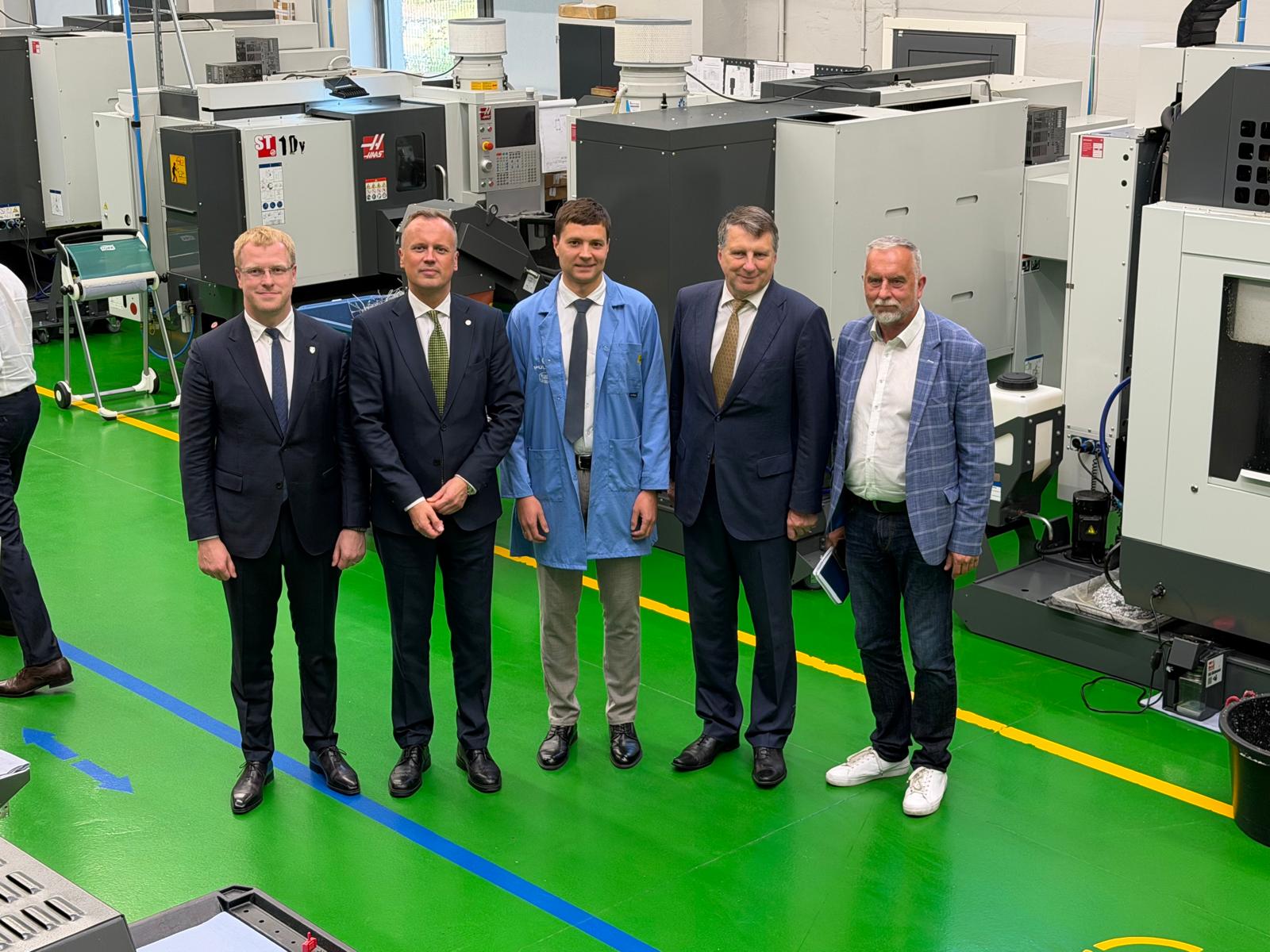
On 29 July, Pulsar Optics in Daugavpils was visited by Minister for Smart Administration and Regional Development of the Republic of Latvia Edgars Tavars, representatives of the ministry, and members of the Daugavpils local government.
The visit allowed representatives of state institutions to learn about the work of a modern high-tech company in eastern Latvia, see Pulsar Optics’ manufacturing capabilities, and discuss the importance of such companies for the region’s industrial development and career opportunities.
The guests were welcomed by the Pulsar Optics team, led by the company’s Director, Pavels Grigorjevs.
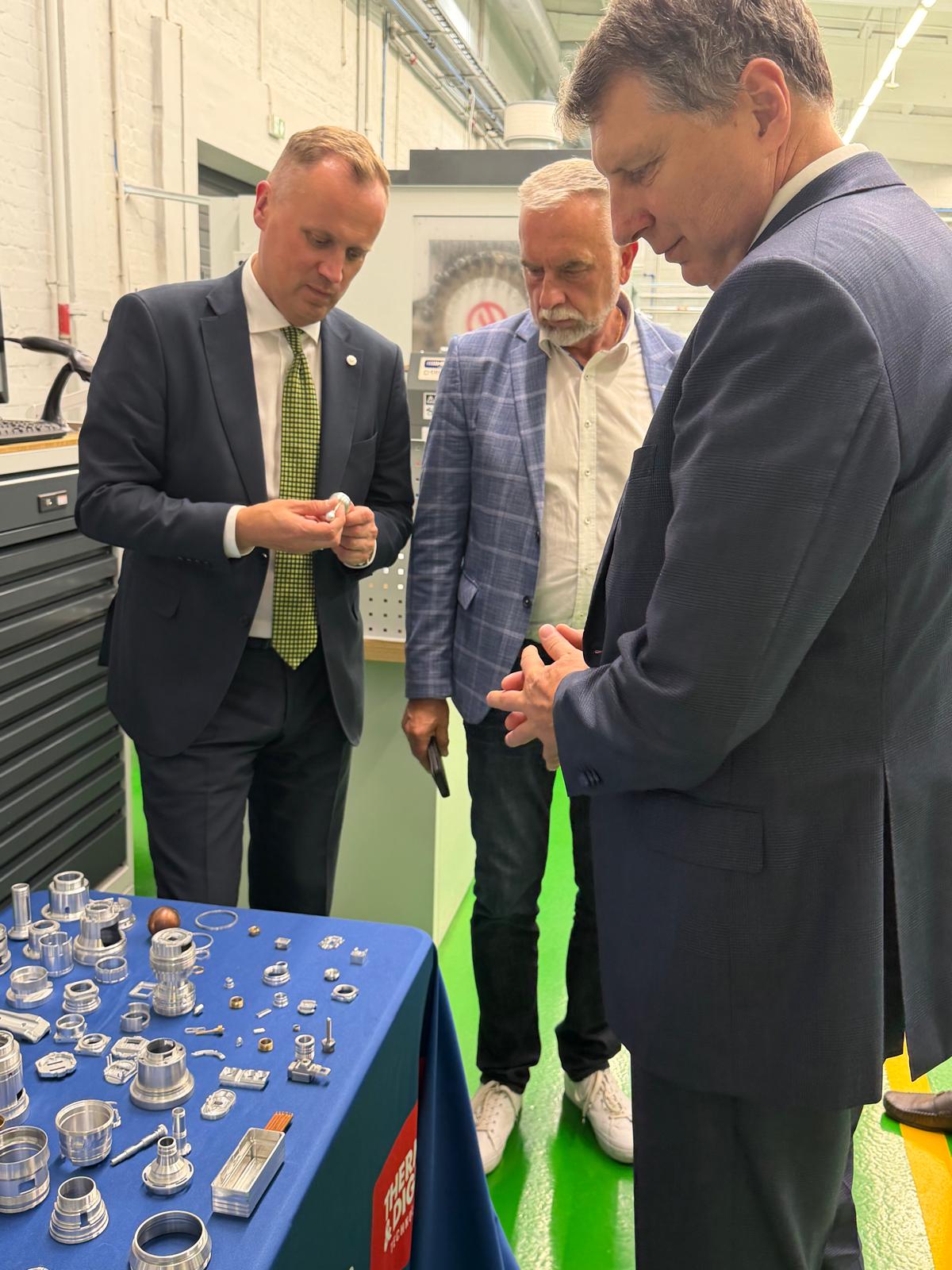
The delegation followed the step-by-step process of creating a device — from the production of plastic and metal components and electronic boards to assembly, adjustment, and final product inspection.
This format helped show one of the company’s key features: in Daugavpils, different technological areas needed to create complex optoelectronic devices are brought together on one manufacturing site.
“By the end of the tour, a person gains a complete understanding of the production process. They see the finished device and understand that many of its components were manufactured literally just a few minutes earlier in neighbouring sections of the facility,” noted Pavels Grigorjevs, Director of Pulsar Optics.
The electronic circuit board production area, one of the company’s most technologically complex sections, attracted particular interest from the guests. At the same time, Pulsar Optics emphasised that its manufacturing capabilities depend not only on modern equipment but also on the expertise of specialists in various fields, including engineers, process engineers, equipment operators, assemblers, quality specialists, and others.
The visit also opened a discussion about the role of high-tech manufacturing in the development of Latvia’s eastern regions.
For such regions, it is especially important to create conditions that provide people with access to modern education, opportunities to build their careers, and jobs at high-tech companies, enabling them to build their professional future in the region.
“It is important that representatives of state institutions visit us and listen to us. When they see production with their own eyes, they better understand how companies in the region operate, what capabilities they have, and what challenges they face. We hope that this kind of dialogue will help ensure that business experience is considered when decisions important for regional development are made,” noted Pavels Grigorjevs.